Why Dog Allergy Medications are not safe

Your dog needs his immune system to protect him from disease. But modern dog allergy medications can damage the way it works … sometimes permanently.

What is a dogs Immune system

Your dog’s immune system is an extraordinary network of cells, tissues and organs that work together to defend against attacks from foreign invaders that cause infection and illness. The immune system is amazingly complex, recognizing and remembering millions of enemies and able to wipe out each one of them.

How do immune systems work

I’ve always thought that if a country’s military commanders did an in-depth study of how immune systems worked, that country would never lose a war.  One important secret to the success of this system is an elaborate communications network that’s organized into swarming subsets, passing information back and forth. These cells rapidly enlist their fellows and direct recruits to trouble spots with special helpers.

Unfortunately, most of the conventional medications we routinely use for the most common problems in dogs work to sabotage, if not destroy, this most precious asset. Allergies are a good example.

Allergies Are A False Alarm

In the case of allergies, the dog’s immune system responds to a false alarm.  Harmless material such as pollen is mistaken for a threat and attacked as an environmental allergy. The immune system considers healthy foods to be enemies and responds with food allergies.  Dog owners resign themselves to reading ingredients, changing foods and purchasing product after product to find relief. Yet, dogs (and people) tend to get allergic to what they contact all the time.

As an example, in my 35 years of specializing in allergies, I’ve found that in almost every case, dogs given fish oil every day become allergic to fish after 3 to 6 months. The attempted fix becomes a problem, and the unsuspecting owner keeps giving that fish oil capsule every day, only increasing the allergic reactions within their dog.

In the case of allergies, food sensitivities and food intolerances, the immune system is misbehaving.

Food sensitivities and intolerances are 15 times more common than allergies. Importantly, they have a delayed reaction … from 7 to 28 days or so. This can be quite confusing if you’re diligently watching your dog’s reaction to any and all foods.

Itching and chronic diarrhea are both so very common in our dogs nowadays so it’s important we understand what’s going on inside our fuzzy friends!

What Causes Allergies In Dogs?

Vaccinations are the largest contributor to the epidemic of dog allergies we see now. They confuse the immune system, activating it against substances your dog’s body should consider friends. For example, bovine serum and chicken embryo are used as proteins to culture dog vaccines. And then your dog’s immune system identifies these proteins as attackers. This starts the beginning of the immune system corruption and confusion.

An allergy is due to a misbehaving immune system. The immune system is reacting to something it shouldn’t be reacting to. Think of a person with peanut allergies. All his friends may be eating all kinds of peanut candies and peanut butter sandwiches, but he can’t touch them. Is the problem the peanuts or the immune system? That’s right, it’s the immune system.

So how do conventional treatments handle this misbehaving immune system? By abolishing it. No matter what drug I mention below, it’s an immune system extinguisher.

How Allergy Drugs Work

Conventional veterinarians have one basic avenue of approach and that’s to weaken, if not destroy the immune system.  The prescription medications used have become more and more frightening … particularly in a world where a functioning and active immune system is so important.

Side Effects Of Steroids

It used to be that vets dispensed steroids like prednisone excessively. Veterinarians had little choice about what to use for dogs with allergies. Steroids worked because they suppressed the immune system. Steroids caused side effects like excess drinking and urinating, along with fur loss. That’s why dogs were weaned off as soon as they were comfortable again.

But often, within months most doggies would have to go back on another round of steroids. Lots of dogs had seasonal allergies so they would go on prednisone in, let’s say, just the spring and fall seasons. At least they were only on these immune-suppressing drugs for short stints. For the most part, the steroids did not change how the immune system would function after the pet stopped them.

Side Effects Of Atopica

Then a new dog allergy drug called Atopica (cyclosporine) became available. Some veterinarians began using Atopica instead of steroids. It didn’t cause excess drinking and urinating and panting. But the side effects of Atopica inside your dog’s body were considerably worse, with a far more devastating effect on the immune system.

Cyclosporine was developed in Switzerland in the 70s. It was designed to prevent the rejection of organs in transplant patients. In order to do this, it had to knock the immune system to smithereens. Dogs were getting cancer (one of the many noted side effects of cyclosporine) because they were on this drug. Nurses, who had to suit up before administering cyclosporine in the hospital to their patients, would call me for consultations on their pets after they had been prescribed this drug. They couldn’t understand how they needed to suit up in protective gear for work and then were casually told to handle and give this drug to their dog.

Side Effects of Apoquel

When Apoquel came onto the market, it seemed to be a dream come true. There was no excessive drinking as with steroids. There were no apparent serious immediate immune-depressing side effects as with cyclosporine. Dogs simply stopped itching and were, once again, comfortable in their own skin. Veterinarians loved it, as it worked well in just about every case. The dogs loved it because they stopped itching. Pharmaceutical companies and vets loved it because people had to buy it and refill it each month … for the dog’s entire life.

And that’s because the dogs who start it can’t seem to get off of this drug.  When a 7-month-old puppy is put on Apoquel, the itching is often way worse when the owner attempts to wean him off than it was before the pup ever went on the drug. (In the old days, the puppy would have had 10 days of prednisone and been OK for months.)

Dogs weren’t taking Apoquel. for some short period in the spring or fall when they had their allergies. Once they started the drug, the dog would seem to need it forever. I specialize in allergies and I see it all the time. You try and try to wean your pet off, with no success, so you wind up refilling and refilling … to Big Pharma’s delight.

Apoquel works because it slays the kinases, which serve as the communicators in the body.

The capacity for internal communication in the body is compromised. Earlier I noted that the secret of the incredible success of the immune system is the elaborate communications network. Apoquel demolishes this network because it kills the kinases, which serve as very important communicators. Kinases coordinate absolutely everything in the body. One talks to another and that one talks to 1000 more kinases and the immune system works because of them.

Apoquel Damage Can Be Permanent

OK … so wouldn’t the kinases just start working again when the pet is taken off the drug?  I personally don’t see this happen. With prednisone the adrenals come back up to par quickly after a short course of the drug. But with Apoquel, the whole system of communication within the body has been changed.

Let’s use a military example again. Roads previously used get closed, trains get shut down. Cell phones don’t work in certain areas. Suddenly the roads open. But all the soldiers are now used to taking the long route – or no route at all –and there is no one to tell them to go back to the old way of doing things. So they continue to work inefficiently and with less communication. They have adjusted and they pretty much stay that way. I do have ways to help the communication systems return to normal as I see so much of this in my practice. The patient who has been on Apoquel and is now cured of the allergies, food sensitivities and intolerances using my holistic methods, still keeps getting yeast and/or secondary bacterial infections. Their immune system is not kicking back in.  In these cases, I need to super-boost the immune system with a somewhat unusual product that works well.

Are Prescription Allergy Drugs The Only Alternative?

Does it have to be one or the other? Changing foods, reading labels and avoidance … or the alternative option of having your beloved friend on an immunosuppressive drug? You see, with allergies the immune system is misbehaving and conventional drugs simply whack-a-mole the immune system.

Anyway, the answer is no. You do have other options because there are therapies that work … and work permanently … to eliminate allergies, sensitivities and intolerances in your dog.

Deva Khalsa VMD
2023-03-29
How to protect Your puppy from Vaccine Damage

How to Protect Your Dog From Vaccine Damage

Unfortunately, most veterinarians continue to remain uninformed about the potential for revaccination to trigger adverse reactions in pets. As a result, they continue to promote automatic revaccination rather than antibody titer tests to see if their patients even need that second, third, or tenth revaccination against the same disease.

Doubly disturbing is that many vets continue to recommend the same vaccine protocols after their patients have had reactions to previous vaccines or have been diagnosed with medical problems. They also downplay the potential for adverse vaccine events, even though mild reactions are quite common, and one step up from mild includes allergic reactions that can be life-threatening.

They also don’t consider the potential long-term effects of vaccines, even though vaccine-associated sarcomas in cats, as just one example, “have been seen to occur anywhere between 2 months to 10 years after vaccination.”

To illustrate my point, let’s take a look at a page on the American Veterinary Medical Association’s (AVMA) website titled What to Expect After Your Pet’s Vaccination.

Mild’ and More Serious Adverse Vaccine Reactions in dogs

The first set of vaccine adverse reactions the AVMA discusses are described as common and mild, appearing within hours after a vaccination:

Discomfort and local swelling at the vaccination site
Mild fever
Decreased appetite and activity
Sneezing, mild coughing, “snotty nose” or other respiratory signs may occur 2-5 days after your pet receives an intranasal vaccine

The AVMA cautions: “It is common for pets to experience some or all” of these reactions, and “If these side effects last for more than a day or two, or cause your pet significant discomfort, it is important for you to contact your veterinarian.”

The second group of reactions are described as less common and more serious, and may occur within minutes to hours after vaccination:

Persistent vomiting or diarrhea
Itchy skin that may seem bumpy (“hives”)
Swelling of the muzzle and around the face, neck, or eyes
Severe coughing or difficulty breathing
Collapse

The AVMA warns that, “These reactions can be life-threatening and are medical emergencies. Seek veterinary care immediately if any of these signs develop.”

The AVMA describes a feline injection-site sarcoma as “A small, firm swelling under the skin” that may develop at the site of a recent vaccination, and which “should start to disappear within a couple weeks.” Also, “If it persists more than three weeks, or seems to be getting larger, you should contact your veterinarian.”

However, if you go to Vaccines and sarcomas: A concern for cat owners, you can get much more information about “An uncommon but serious adverse reaction that can occur with injection sites, including those sites where vaccines are administered.”

reaction to a vaccine like those described above. Adverse events, or hypersensitivities, whether mild (such as lethargy, flu-like symptoms, etc.), or severe (such as anaphylactic shock), that are clearly linked to a recent vaccination are widely acknowledged by the conventional veterinary community. They’re viewed as occasional aberrations of a basically safe procedure.

Vaccinosis: It’s a Real Thing

The condition of vaccinosis isn’t recognized by most conventional veterinarians and isn’t something many pet parents are familiar with, either. But first, let’s talk about what vaccinosis isn’t.

It isn’t an acute, often immediate adverse reaction to a vaccine like those described above. Adverse events, or hypersensitivities, whether mild (such as lethargy, flu-like symptoms, etc.), or severe (such as anaphylactic shock), that are clearly linked to a recent vaccination are widely acknowledged by the conventional veterinary community. They’re viewed as occasional aberrations of a basically safe procedure.

Vaccinosis, on the other hand, is a problem only holistic and integrative veterinarians are willing to acknowledge, however, many conventional vets have become more open minded about the concept since prominent health organizations have acknowledged ongoing potential COVID vaccine side effects.

It’s a reaction of a pet’s body to vaccines that have been injected without the pet having experienced a notable adverse event or hypersensitivity. These are chronic reactions to not only the altered virus contained in the vaccine, but also to the chemicals, adjuvants, and other components of tissue culture cell lines — as well as possible genetic changes — that can be induced by vaccines.

Dr. Richard Pitcairn, who holds a Ph.D., in immunology and is also a world-renowned expert and educator in veterinary homeopathy, as well as author of the handbook of holistic health care for pets, Dr. Pitcairn’s Complete Guide to Natural Health for Dogs & Cats, defines it this way:

“Vaccinosis is to be understood as the disturbance of the vital force by vaccination that results in mental, emotional, and a physical change that can, in some cases, be a permanent condition.”

According to Pitcairn, vaccines intended to protect pets against acute natural diseases create chronic conditions with features of the disease the vaccine was supposed to prevent. This transformation happens in the laboratory, where natural viruses are modified to make vaccines.

Where the natural virus would trigger a strong immune system response, the modified lab-created virus in the vaccine doesn’t elicit much of a reaction by the animal’s immune system. Instead, it holds the potential to create chronic changes in the body that can lead to disease.

The delivery of a vaccine is also very different from how a natural disease develops in an animal’s body. Vaccines contain several potentially reactive substances, including heavy metals, mutated bacteria/cell cultures, immune irritants (adjuvants), foreign proteins, and chemical preservatives.

All these toxins are delivered by injection directly into the blood and lymph, bypassing the usual first lines of defense, including the skin, nose, mucous membranes, saliva, and so forth. So not only is the lab-modified virus in the vaccine unnatural, the way it enters an animal’s body is also very unnatural. When you look at the situation from this perspective, it’s easy to see how abnormal immune reactions can be triggered by vaccinations.

Symptoms of Vaccinosis in puppies

Common:

Lethargy
Hair loss
Hair color change at injection site
Fever
Soreness
Stiffness
Lack of appetite
Conjunctivitis
Sneezing
Oral ulcers


Serious:

Immunosuppression
Behavioral changes
Vitiligo
Weight loss
Reduced milk production (females)
Lameness
Granulomas and abscesses
Hives
Facial swelling
Allergic hypersensitivity
Respiratory disease
Allergic uveitis


Severe:

Injection-site sarcomas (cancer)
Anaphylaxis
Autoimmune arthritis
Polyarthritis
Hypertrophic osteodystrophy
Autoimmune hemolytic anemia
Immune-mediated thrombocytopenia
Thyroiditis
Glomerulonephritis
Myocarditis
Encephalitis or polyneuritis
Seizures
Abortion
Congenital abnormalities
Embryotic (fetal) death
Infertility

How to Protect Your Pet From Vaccine Damage

My vaccination protocol is to administer a first round of puppy shots (distemper, parvo, adenovirus) or kitten shots (panleukopenia, calici, herpes) before 12 weeks of age, usually around 9 to 10 weeks. I give the second round between 15 and 16 weeks. Two weeks after the second round, I do an antibody titer (via a simple blood draw) to ensure the animal has been immunized and not just vaccinated.

Subsequent titer tests can be run as often as a pet parent wishes (most vets suggest every 1-3 years) to ensure their dog or cat is still protected against disease, with the understanding that immunity against core diseases lasts much longer than current vaccination guidelines indicate — often for the animal’s lifetime. I don’t usually titer indoor housecats after their initial core vaccines because their exposure is effectively zero.

When it comes to rabies, I prefer to give the first vaccine at 6 months, and then as required by law, a booster 1 year later and every 3 years thereafter. Dr. John Robb’s Protect the Pets campaign is working to amend the mandatory rabies over-vaccination laws in each state, and to accept rabies titers instead.

“This is very simple stuff,” says Dr. Robb, who I’ve interviewed. “We vaccinate to produce immunity. We can measure that immunity with a simple blood test called the titer.”

I don’t typically recommend non-core vaccines. Each vaccine your pet receives should meet the following criteria:

First, your dog or cat should be healthy. If she has allergies, endocrine issues, organ dysfunction, cancer (or is a cancer survivor), epilepsy or another medical issue she’s not a candidate to receive vaccines.
The vaccine is for a life-threatening disease (this eliminates most non-cores immediately).
Your pet runs the risk of exposure to the disease.
The vaccine is considered both effective and safe (most aren’t, especially the bacterins Lyme and Lepto).
Your pet has never had an adverse reaction to a vaccine. Do not vaccinate a pet that has had a previous vaccine reaction of any kind.

If you do vaccinate your pet, ask your integrative veterinarian to provide a homeopathic vaccine detox such as Thuja (a common choice for all vaccines except rabies).

It’s also important to realize that several non-core vaccines are only available in combination with other vaccines, some of which are core. I recommend you check with your vet to ensure none of the non-core vaccines are being piggybacked on core vaccines your pet receives.

Unfortunately, most conventional veterinarians do not carry single vaccines, so it’s a good idea to ask to see the vaccine vial before assuming your pet is only receiving one agent at a time.

Analysis by Dr. Karen Shaw Becker

What dose your puppies poop tell you

What does it mean when your dog’s poop is a weird color instead of the usual chocolate brown?
Yellow/Orange
Can mean liver or gall bladder problems.

Green
Gall bladder problem, intestinal parasites or bacterial infection.

Blue
Your dog may have eaten rat poison.

Black
Can mean your dog’s digesting blood, especially if stools look tarry. May indicate upper GI tract bleeding, pancreatitis, ulcers, or a parasite.

Grey
May be a pancreas issue, especially if the stools are greasy. Could also mean gall bladder problem or parasites.

Bloody
Red or pink swirls like a strawberry milkshake can mean bleeding in the lower GI tract. Can be a sign of parvovirus in puppies.

Red jelly poop (like strawberry jam) is very serious and could mean HGE – hemorrhagic gastroenteritis.

White Flecked
Can be normal in raw fed dogs with pieces of undigested bone or chalky stool. White flecks like grains of rice could be tapeworm segments. Check for fleas too – tapeworms can come from licking flea eggs.

Mucous
Continuing mucousy diarrhea could mean parasites, bacterial infections, inflammatory bowel disease, or, if bloody as well, HGE. Occasional mucousy stool usually just means your dog is detoxing something.

When To See Your Vet
It’s time for an emergency vet visit if you see …

Blue poop
Strawberry milkshake swirls
Jelly/strawberry jam poop
Bloody diarrhea in a puppy
Continued mucous in diarrhea

Vaccinating your puppy

All of the vaccines given to dogs fit into 2 categories: core and non-core vaccines.

Core vaccines are the ones most vets recommend your dog should have as a puppy. These vaccines all protect against dangerous viral diseases. They are:

Rabies
Distemper
Parvovirus
Adenovirus (Canine Hepatitis)


The Non-Core vaccines include:

Bordetella
Lyme Disease
Leptospirosis 4-way (this is sometimes included in combination vaccines with core vaccines, but it is a non-core vaccine and should be considered separately)
Canine Influenza
Parainfluenza
Adenovirus Intranasal
Several of the non-core vaccines (Bordetella, Lyme and Leptospirosis) are bacterial vaccines. Bacterial vaccines have low efficacy rates coupled with high incidence of adverse reactions. This means they should rarely be used, and then, only after careful consideration of all the risks of vaccinating vs not vaccinating against these diseases.

How long do vaccines last

Why you should not over-vaccinate your dog


If you do plan to give your dog any of these vaccines (or you already have), you’ll need to know how long they last and how to protect him after. But that still doesn’t answer the question of which ones your dog needs. We’ll get to that shortly. The Minimum Duration of Immunity of the Core Vaccines for Protection against disease from these vaccines has been proven by clinical studies to last from 7 to 15 years (depending on the vaccine). The core vaccine information in this article is based on clinical studies by Ronald D Schultz PhD and you can read more about his work online.

If your dog has had any of the core vaccines at 16 weeks of age or older, he’s most likely protected for life and doesn’t need to be vaccinated again.

Your veterinarian may not agree with this. Unless your veterinarian is truly holistic, she will probably at least follow the AAHA guidelines.

Some veterinarians may imply that the core vaccines are required by law. But, except for rabies, they’re not.

Next, for non-core vaccines, you’ll see we’ve focused on the three main non-core vaccines that your vet’s likely to recommend: Bordetella (kennel cough), Lyme Disease and Leptospirosis. Since we don’t reccomend any of these vaccines unless absolutely necessary.

Vaccinating your dog more often than necessary can be very dangerous for him. All vaccines have potential adverse reactions. These can range from fairly mild reactions like lethargy or soreness, to really severe ones like anaphylactic shock, autoimmune diseases and even death. The vaccine can also cause the disease it’s intended to prevent!

When your dog is protected by the vaccines he’s already had, vaccinating him again does not make him “more immune.” Vaccines also contain other ingredients that are potentially harmful for your dog.

Ingredients in vaccines

Most vaccines include toxic ingredients that add to the risks of vaccinating your dog.

Two of these are:

Thimerosal
This is a mercury based additive used as a preservative. Mercury toxicity is well known and repeatedly proven in studies. Yet it’s still contained in most veterinary vaccines today. Even some vaccines that claim to be thimerosal-free may still contain small amounts of thimerosal. That’s because it can be used in processing but not added as an ingredient, so the manufacturers don’t have to disclose it.

Gentamicin
This is an antibiotic. According to the FDA, antibiotics are in vaccines to prevent bacterial infection during manufacturing, So when your dog gets a vaccine, he’s getting antibiotics whether you like it or not.

So it’s always a good idea to give your dog probiotics (soil based probiotics or S. boulardii are best) to help reduce gut damage caused by antibiotics and other drugs.

What to do at the veterinarian’s office

For Core Vaccines
If your veterinarian presses you to over-vaccinate your dog with core vaccines, you can draw her attention to Dr Schultz’s research. Dr Schultz’s studies show the minimum duration of immunity that likely protects your dog for life once he’s had his core vaccines as a puppy or adult.

If your vet needs more convincing, you can ask for titers to confirm your dog’s protected. Some vets charge an exorbitant amount for titers (perhaps because they really don’t want to do them) and some may even refuse.

If that’s the case, you can ask your vet to draw the blood for you (usually about a $20 charge) and then send it yourself to Hemopet for testing. You can submit your titer request on Hemopet’s website. A distemper and parvo titer costs a little over $50 and you can ship the vial of blood cheaply via a US Postal Service Priority Mail Small Flat Rate Box.

For Non-Core Vaccines
Your vet is likely to recommend Bordetella and Leptospirosis vaccines, as well as Lyme if you live in a high tick area. All of these vaccines carry a high risk for your dog and don’t work very well.

Bordetella: If you board your dog, try to find a kennel that doesn’t require Bordetella. If your kennel does, ask to sign a waiver accepting the risk of your dog getting kennel cough on their premises … that’s what they’re afraid of. Or better yet, have a pet-sitter come to your home and then you don’t need to worry about vaccination requirements.


Leptospirosis: If you think your dog is at risk for lepto, make sure you find out from your local health authority what strains of lepto are in your area. The vaccine covers the L. canicola, L. icterohaemorrhagiae, L. grippotyphosa and L. pomona serovars. If these strains aren’t prevalent where you live, there is no point in taking the risk of vaccinating your dog.
Also note that some vets give the Leptospirosis vaccine in conjunction with core vaccines. You may see a vaccine called something like DHLPP. That “L” is leptospirosis … make sure you know what vaccines your vet is using. Your dog could still get the lepto shot.

Lyme: if your dog’s not out in the woods picking up ticks, he’s probably not at risk for Lyme disease. If you do take your dog into tick-infested areas, use natural protection methods to keep the ticks away. Check him thoroughly for ticks when you get home. Removing the ticks promptly will help prevent the tick from infecting him.
So which dog vaccines are absolutely necessary? That’s a question only you can answer! But now you have the information you need to decide for your individual dog.

Article by  Julia Henriques
2022-09-21

Dog Training: the drop it command

Training the Drop it command by toy Switching

Toy Switching (teaching a drop it):

Toy switching is my favorite way to teach a drop it inside of play. To do this, all you need are two identical toys and dog who loves to tug.

Level one: teach the toy switch

Start by playing tug with one toy (while another toy is behind your back). At some point, stop moving the toy you’re playing with and present the new toy, making it “come alive” by moving it. When your dog switches to the “live” toy, praise and play and put the other toy behind your back. Switch back and forth in this manner until your dog easily and quickly switches between them.

Level Two: Add a cue

When your dog is easily switching between toys, you’ll add your “drop it” cue right before you stop moving toy #1 and bring out toy bring toy # 2. This will teach your dog the word “drop it” means a new toy is coming and he should let go of this one in his mouth.

Early Neutering In Dogs: Risks & Benefits

The topic of neutering is emotionally charged for many pet owners.

It’s become the “responsible” thing to do. So we commonly hear of the benefits of this surgery … but rarely the risks.

And when savvy pet owners avoid early neutering (or forgo neutering altogether) to mitigate that risk … they’re often vilified for contributing to the pet over-population problem. But decisions made on emotion aren’t usually the best decisions we can make.

So here’s an objective and scientific look at what’s causing all the fuss. Let’s start with one well-known study that showed reasons to reconsider early neutering in dogs …

In February 2014, a study was completed on over 2500 Vizsla dogs and the results were a blow to those who vehemently defend spay/neuter (1). But this study is just the one of a long line of work showing that removing a quarter of the dog’s endocrine system might not be in the dog’s best interests – and maybe not even in the best interests of rescues and shelters.

Effects Of Neutering A Dog Too Early

Let’s look at what this research shows are the three most important reasons you should reconsider neutering your dog

explains (6) …

…if the femur has achieved its genetically determined normal length at eight months when a dog gets spayed or neutered, but the tibia, which normally stops growing at 12 to 14 months of age continues to grow, then an abnormal angle may develop at the stifle. In addition, with the extra growth, the lower leg below the stifle likely becomes heavier (because it is longer), and may cause increased stresses on the cranial cruciate ligament.

Additionally, sterilization can cause obesity and a loss of bone mass (7). Both of these factors could lead to an increased risk of cranial cruciate ligament tear and hip dysplasia. And a 2005 Austrian study showed that spayed/neutered dogs are over three times more likely to suffer from patellar luxation (8).

There are many things you can do to help your dog’s joints. Unfortunately … there are even more sinister issues with early neutering in dogs.

Neutering And Cancer

Contrary to popular belief, we can’t neuter cancer. In fact, this surgery mostly increases the risk of many common canine cancers.

The Golden Retriever study found that the incidence of lymphosarcoma was three times higher in males neutered before 12 months of age. These results are similar to other studies. They also found that spayed/neutered dogs were 3.5% more likely to suffer mast cell cancer and 4.3 times more likely to suffer lymphoma.

2002 research on Rottweilers at Purdue University found that male and female dogs neutered or spayed before 1 year of age had an approximate one in four lifetime risk for bone sarcoma … and they were significantly more likely to develop bone sarcoma than dogs that were sexually intact (9).

A 2002 study at Utrecht University found that prostate cancer occurs in neutered males about four times as frequently as in intact males (10) … despite the popular belief that neutering prevents prostate cancer.

Neutering And Behavior

Neutering had been previously linked to cognitive impairment and even a three-fold risk of hypothyroidism (which often creates behavior changes). But the Viszla study yielded some particularly interesting insight into this link. They found that neutered dogs were also more likely to develop behavior disorders than intact dogs. The problems included:

  • Fear of storms
  • Separation anxiety
  • Fear of noises
  • Timidity
  • Excitability
  • Aggression
  • Hyperactivity
  • Fear biting

Another study in 2010 (10) found neutered dogs were more:

  • Aggressive
  • Fearful
  • Excitable
  • Less trainable than intact dogs

This is contrary to the popular belief that neutering reduces aggression and other behavior problems.

These findings also present a conundrum for shelters and rescues who advocate early neutering in dogs.

What Happens If You Neuter A Dog Too Early?

Reducing the number of dogs in shelters is an important goal … but it would be much better to prevent them from ending up at the shelter in the first place. Most people believe that shelters are full because of over-population. But in fact, behavior problems are the most common reason owners give up their dogs.

And is it fair for shelters to burden adopters with the increased risk of cancer and joint disease? There are alternatives to the complete removal of the reproductive organs and this might play a role in reducing the risk of cancer, joint disease and behavior issues.

Conventional neutering immediately shuts off the supply of protective hormones in the body. Hormones produced by the reproductive organs are essential for reproduction … but they’re also vital in developing …

  • Homeostasis
  • Body condition
  • Cholesterol levels
  • Energy levels
  • Urinary continence
  • Muscle tone
  • Cognition
  • Behavior

Reproductive hormones also play a role in the immune system. The rise in the risk of many cancers after removal of the reproductive organs is evidence of this.

Hopefully the emerging research will encourage more shelters to look into safer and less intrusive options.

Safer Neutering Options For Dogs

Modified neutering methods have less impact on the hormones and endocrine system. So dogs enjoy more hormone protection, even when sterilized.

Vasectomy can be a safer option for males. There is also a zinc injection but it may be hard to find due to the company’s recent financial difficulties.

Finally, if your goal is to give your dog the best chance at a life free of joint disease, cancer and behavior issues, then keeping your dog intact is certainly an option. If you’re thoughtful and caring enough to get this far in the article, you’re certainly thoughtful enough to manage an intact dog.

Simply make certain that your intact male isn’t allowed to wander (and you keep your intact female on leash for a few weeks when she is in estrus).

Removing a significant part of your dog’s endocrine system should be anything but routine.

As research continues to show the damning results of early neutering in dogs, it’s certainly in your dog’s best interests for you to consider these three important reasons to keep your best friend just the way mother nature made him.

article by Dana Scott 2022-07-19

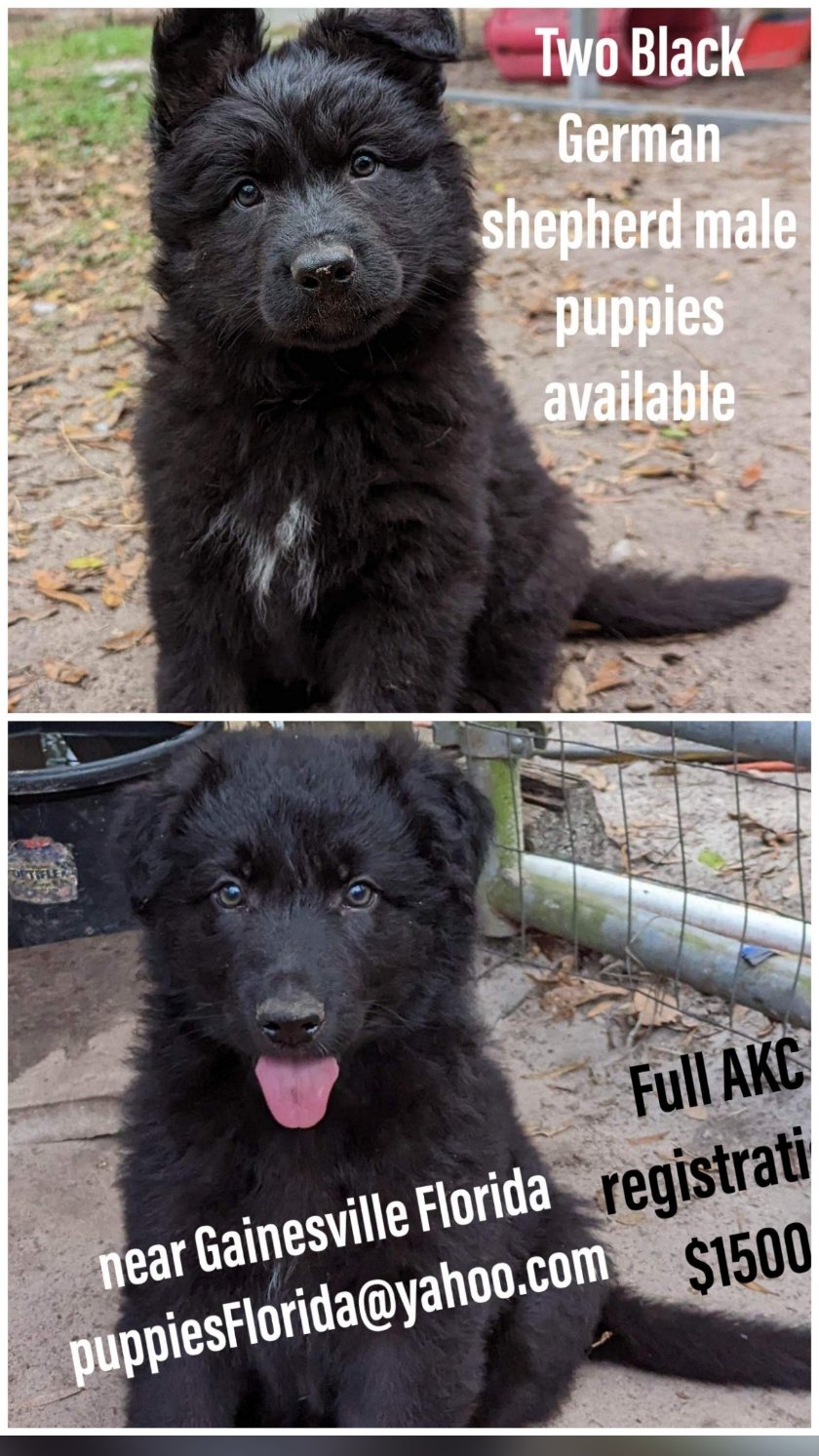
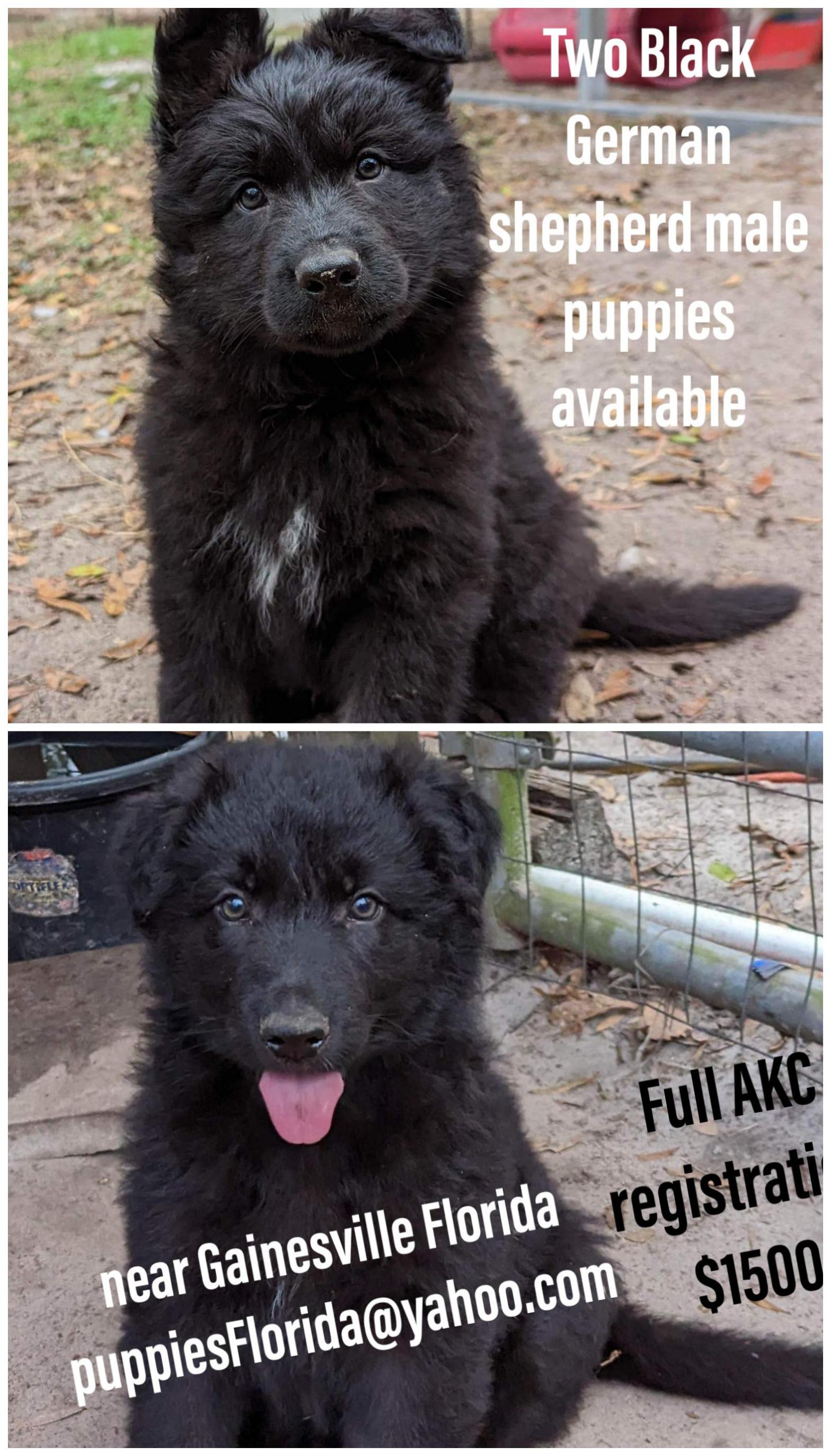
German shepherd puppies for sale in Florida

Feeding your German shepherd puppies

How can I tell if a dog food is safe for a large breed puppy.

According to the Association of American Feed Control Officials (AAFCO)…

The maximum amount of calcium recommended for large breed puppies is 4.5 grams of calcium per every 1000 kcal (calories) in the food… or 1.8% calcium.12

Keep in mind… the calcium content printed on the label does not reveal this amount.

That’s because those figures are based on MINIMUMS… which is NOT acceptable.

You want to know the EXACT amount of calcium obtained by actual lab testing (by asking the company)…

Or the MAXIMUM amount the manufacturer is willing to guarantee to you on the label.

Thankfully…

AAFCO now requires13 those calcium standards to be guaranteed in each product’s Nutritional Adequacy Statement on the packaging.

You should see “meets AAFCO nutrient profiles” for either “growth” or “all life stages”… AND the words… “including growth of large size dogs (animals weighing over 70 pounds)”.

Since we never know the adult weight of a puppy before it’s fully grown, we recommend using a more conservative 50 pound definition for large breeds

How much food should I feed my large breed puppy?

Determining how much to feed your large breed puppy is a process… NOT a one-time decision.

Since a large breed puppy consumes more food each day than a smaller breed…

And because each dry food contains a different number of calories per cup…

It’s best to start with the recommended feeding amount printed on the package. Then, adjust that amount… to keep your puppy at her ideal weight.

How often should I feed my large breed puppy?

Once you’ve determined how much to feed your puppy per day

Simply divide that daily feeding amount into 3 or 4 smaller servings.

Then… feed those smaller portions to your puppy at regular intervals throughout the day.

To make it easy…

Try feeding your puppy whenever YOU eat… breakfast, lunch and dinner

When should I switch my puppy to adult food?

Adult dog food can contain excessive amounts of calcium… which can make it unsafe for a puppy that’s still growing.

So… it’s important NOT to switch your puppy to adult food too soon.

With that in mind…

The best time to switch your puppy to adult food depends on her breed type. German Shepherds are usually between 12 to 18 months.

Keep in mind…

It’s much safer to keep your dog on puppy food too long… than to switch to an adult food too soon.

Is it safe to let my puppy eat whenever she wants?

Free choice’ is a popular feeding method whereby the food remains in the bowl all day long… so a puppy can eat… whenever she wants.

Sadly, many owners of large breed puppies mistakenly believe that this form of uncontrolled eating is the correct way to feed their pets.

But free choice feeding has been shown to cause a puppy to grow too fast… and lead to lasting bone damage.

A 1995 study of Great Danes revealed a significant increase in the risk of developing hip dysplasia when the puppies were fed free choice.

In another study, one group of Labrador Retriever puppies was fed throughout life a restricted calorie diet… while a second was fed free choice.

The restricted calorie group experienced a much lower risk of developing hip dysplasia later in life.

So, be sure to control the amount of food and the way you feed your puppy every day.

Article by DogFoodAdvisor.com

Smart training German shepherd puppies

This lesson is all about Kathy Sdao’s SMARTx50 training protocol – the fastest way I have found to be the fastest and most effective way to improve our dogs’ manners.

What is SMART Training?

SMART stands for See, Mark and Reward Training x 50 (because you’re going to do fifty a day). You’re going to count out 50 small healthy treats (or pieces of dog food), and throughout the day, you’re going to:

See your dog doing something good.
Mark it with something like a “Yes” or “Good” or a clicker
Reinforce your dog with one of the small healthy treats you’ve counted out
I like to give treats for anything I’d like to see my dog do again, things like:

Coming in from outside when called
Laying calmly at my feet
Laying calmly on his dog bed
Not jumping on the counter
Not chasing the cat that walks past
Going to the bathroom outside
Chewing on his bone
Greeting politely
Coming when called
Responding to his name
Anything else the dog does I hope he does again

Why SMART?

As mentioned above, this protocol will help you solve issues at home while improving your skills as a trainer. SMART works because that’s how dogs learn, If something is reinforced, it’s more likely to happen again in the future.

Dog training really is that simple: dogs learn through punishment and reinforcement, just like us.

Training method by Kathy Sdao SMARTx50 training

Crate Training your German Shepherd puppies

Step 1: Introduce Your Puppy To The Crate

If you’re crate training a puppy, your job is simple: make every interaction puppy has with her crate a positive one. The best way to crate train a puppy is to go slow and try not to stress the puppy or yourself over the process. And the best way to reduce stress is for your puppy to associate the crate with good things for puppy. 

Throughout the day, drop some yummy treats in your puppy’s crate. Finding edible treasures in her new room will build a positive association. You should also feed all your puppy’s meals in her crate for the same reason. If she’s hesitant to enter the crate, put her food and treats inside the doorway. Gradually move them to the back of the crate.

You can also take your puppy’s favorite toy or chew and tie it to the back of the crate. This will encourage her to lie down in the crate to play with it. If your puppy doesn’t love the crate, and you believe she’s had a bad experience with it before, be patient. Never push or force your puppy into her crate. That’s a surefire path to a puppy who cries or whines in the crate.

Step 2: Make Puppy Crate Training A Game

Once your puppy has gone in the crate a couple of times, it’s time to make a game of it. Let her see you with yummy treats or fun toys and toss them into the crate. Praise the puppy when she runs into the crate to retrieve them.

When your puppy comes back to you, start the game again. Do this five times in a row, several times a day.

After a few days of tossing treats in the puppy’s crate, you can start teaching her to go into the crate herself. Before you start this step, your puppy should already run into the crate to retrieve treats when you toss them in. When she does, toss the cookie in the crate. Ss she’s running inside, say “Get in your bed” and praise her when she does.

Repeat this about 5 times, for 10 sessions, until she races into the crate to get her treat. Then, you’ll want to make it a bit more challenging.

Next, instead of throwing the cookie in first, say “Get in your bed.” And wait until your puppy goes in the crate before you give her the treat. If she doesn’t, wait … and if she still doesn’t go in, end the session.

Try another session in a bit and go back to throwing the cookie in first, then you can try the cue again. When she goes into her crate on cue, give her several cookies and make a huge deal out of her. Do it a couple more times, then end the session.

The key to crate training a puppy is to always leave her wanting more.

Step 3: Close The Door

Once your puppy goes into the crate on cue, it’s time to close the door. Ask her to “Get in your bed” again, then close the door once she goes in. You still want to give her treats … but this time, feed them through the door. Give her three or four treats, then open the door. Repeat this about 5 times.

Next, walk around the crate after you close the door. Toss treats at your puppy as you do, then let her out after a minute or two. Make this a fun game. Once you can do a few laps around the crate, it’s time for the next step.

Step 4: Short Stays 

The next step to crate training a puppy is to build up some duration. Get your puppy a special bone to chew on, place her crate beside your chair and put some toys in the crate. Then cue up Netflix. Your goal is to have your puppy crated beside you for an hour or two.

Make a point of getting up and going to the kitchen for a drink or a snack. But make sure you’re back in a minute or so. You can even bring snacks back for the puppy. Her first experience in lockdown needs to be a very, very positive one!

If she starts to cry or throw a tantrum, ignore it. Never open the door if she is vocalizing … you will train her to throw tantrums to get out of the crate. Never reward behaviors you don’t like.

After about half an hour, let the puppy out of the crate, as long as she’s quiet. Open the door and say “OK.” Don’t fuss over your puppy. You want the fun and treats to happen while she’s in the crate and behaving nicely, not outside the crate.

Once she exits the crate, give her the cue to go back in again and give her something delicious when she goes inside. This time, don’t close the door.

If the puppy doesn’t go back in the crate, try to bribe her with toys or treats. Do whatever you can to get her back in the crate, but don’t lock her in it. You want her to learn that going in the crate doesn’t mean she has to be there for a long time.

Your puppy can then relax outside the crate while you finish your movie.

Step 5: Longer Stays 

If movie night was a success, it’s time for longer duration lockdowns. For the next few days, lock the puppy in her crate when you’re home for longer periods. Do your housework, get caught up on your taxes, do some work or laundry … all while she is relaxing in her crate.

She may vocalize, but remember to never open the crate when she does. Rewarding any behavior will make it happen more often.

Be sure to keep checking in and giving treats. You want your puppy to learn it’s no big deal if you disappear … and that you’ll always come back. So when you start to leave the room, praise puppy when you disappear then come back and give her a treat.

To set your puppy up for success, always make sure she has a nice chew when you put her in her crate.

Continue to come and go and praise her when you’re out of her sight. Make a big deal out of how good she is and drop by her crate often to drop treats in for her.

If your puppy will go in her crate willingly and stay without crying, you can extend your puppy’s crate time without you around. Here’s a good schedule for extending lockdowns:

  • 1 minute
  • 5 minutes
  • 15 minutes
  • 30 minutes
  • 1 hour
  • 2 hours
  • 3 hours
  • 4+ hours

Be sure to throw in some shorter duration stays as you increase the time. Continue asking your puppy to go in her crate for just a few seconds to a minute with lots of rewards.

Step 6: Leave The House 

When she is happily relaxed in her crate, you can start to leave the house. Use the same schedule above and continue to mix in short stays with lots of cookies.

Once you ask her to hang out alone in her crate for an hour or more, make sure you set her up for success. The best time to ask her to stay home alone is when she’s tired. Take her out for a good romp before you leave for an hour or longer. And make sure you give her water and a good chew toy.

It’s important that you leave and return without any fanfare or fuss. You’ll want to spend lots of time snuggling your puppy, but now is not the time. Be businesslike with departures and arrivals.

If you make a big deal out of leaving, she’ll learn to make a big deal of leaving!!

Crate Training A Puppy At Night 

Despite your best efforts, the first night may be a bit stressful for your puppy. There may be crying, there may be barking or puppy may pee in the crate at night. Don’t worry, it will get better!

The key to success is to place the crate right beside your bed for the first few nights or weeks. Remember, you don’t want your dog to associate her crate with you leaving! She should be close enough that you can stick your fingers in the crate. If she vocalizes at night, tell her she’s a good puppy and put your fingers in the crate. She’ll appreciate the company and should settle back in and go right to sleep.

If puppy doesn’t settle after a few minutes, she probably needs to go outside. Just pick her up and don’t talk with her or fuss over her. She needs to know she’s being let out for business, not for fun …

So try to interact with her as little as possible. Nighttime is for sleeping, not for fun!

Training tip by Dana Scott
2022-12-05, Dogs Naturally. https://www.dogsnaturallymagazine.com/crate-training-a-puppy/

Design a site like this with WordPress.com
Get started